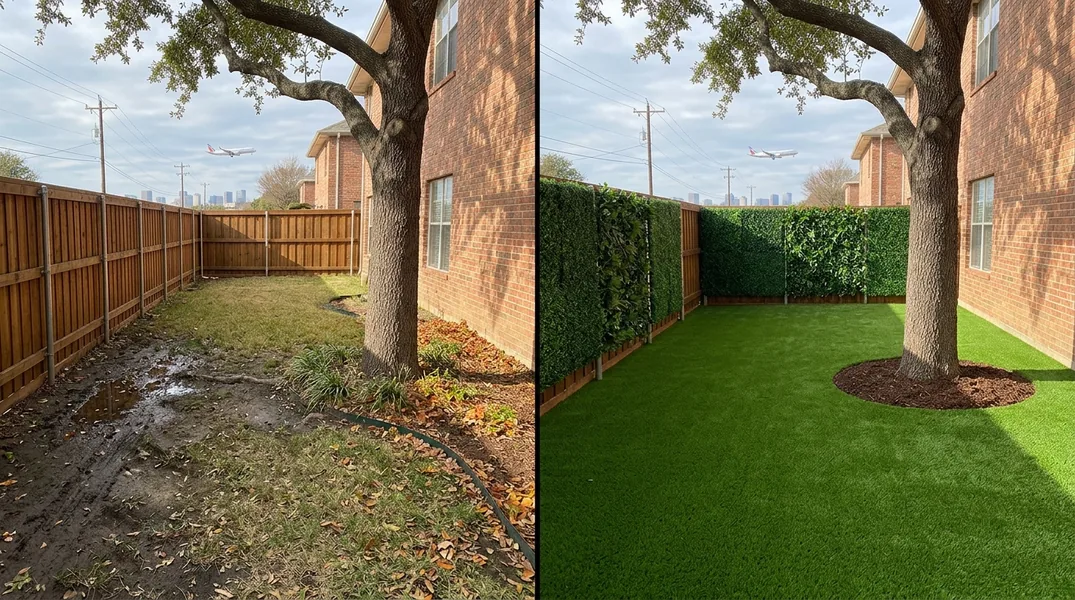
Understanding Irving's Blackland Clay Challenge
Homeowners in Irving face a unique soil condition that demands careful attention during artificial grass installation: blackland clay. This heavy, dense soil type is common throughout the Dallas-Fort Worth region and presents both challenges and opportunities for turf projects. When clay soil becomes saturated, it holds water like a sponge, creating poor drainage that can undermine even the highest-quality artificial grass installation.
The problem intensifies because blackland clay expands when wet and contracts when dry, causing ground movement that destabilizes your turf base. Without proper preparation, you might notice settling, soft spots, or standing water after heavy rain. This is precisely why Residential Artificial Grass Installation in clay-heavy areas requires a strategic approach that goes beyond simply laying turf over existing soil. Understanding these soil dynamics is the first step toward a beautiful, durable lawn that will serve your family for years to come.
What to Put Under Artificial Grass: The Foundation Layer Strategy
The foundation of any successful artificial grass installation begins with understanding what to put under artificial grass in clay-prone areas. The base layer serves multiple critical functions: it provides stability, facilitates drainage, and creates a smooth, level surface for the turf itself. In Irving, where blackland clay dominates, this foundation becomes even more essential.
Most professionals begin with a geotextile fabric layer placed directly over the existing soil. This permeable membrane prevents clay particles from migrating upward while allowing water to pass through. Above this, a layer of crushed limestone or decomposed granite (typically 2 to 4 inches) creates a stable, compacted base that resists settling. This material is specifically chosen because it compacts well, provides excellent drainage, and doesn't break down over time like organic materials. The crushed stone layer must be properly compacted using a plate compactor or hand tamper to ensure an even, firm foundation that won't shift under foot traffic or weather stress.
For properties with particularly problematic drainage, a second drainage layer may be added above the stone base. This often consists of a specialized drainage board or additional permeable material that channels water laterally toward drainage channels or existing storm drains. The goal is to prevent water from pooling beneath your turf, which would eventually cause the base to settle and create uneven spots in your lawn.
Artificial Grass Underlay: Choosing the Right Material
The artificial grass underlay is distinct from the base layer and serves as the immediate cushioning beneath your turf. This material affects comfort, drainage performance, and the longevity of your installation. There are several types of underlay available, each with specific advantages depending on your property's needs and the intended use of your lawn.
Closed-cell foam underlays offer excellent cushioning and are popular for high-traffic residential areas where comfort matters. They compress slightly under foot, providing a softer feel than harder materials. However, they require excellent drainage infrastructure beneath them because they themselves don't drain as quickly as open-cell alternatives. Open-cell foam underlays, by contrast, provide superior drainage while still offering reasonable comfort and support. These materials allow water to flow through rapidly, making them ideal for Pet Turf & Dog Run Installation where urine drainage is critical, as well as for residential properties in clay soil regions.
Rubber crumb underlays, often made from recycled materials, provide excellent drainage and durability. They're particularly valued in commercial applications and high-traffic residential settings. When selecting an underlay for your Irving home, consider both drainage performance and your family's comfort preferences. A qualified installer can recommend the best option based on your soil conditions and lifestyle needs.
Turf Base Prep: The Step-by-Step Process
Proper turf base prep is where professional installations separate themselves from DIY attempts. The process begins with a thorough site assessment and soil analysis. Before any digging or preparation work begins, the existing soil should be evaluated for drainage capacity, compaction level, and overall condition. In areas with severe clay problems, removing the top 6 to 12 inches of native soil and replacing it with improved material may be necessary. This sounds drastic, but it's often the most cost-effective long-term solution for Irving properties with poor drainage history.
Once the soil assessment is complete, the area must be properly graded to ensure water flows away from structures and toward drainage points. This is critical in clay soil regions where standing water becomes problematic quickly. The grading should create a gentle slope, typically 1 to 2 percent, directing runoff toward drainage channels or natural low points on the property. After grading, the geotextile fabric is laid and secured, followed by the crushed stone base layer. This layer must be spread evenly and compacted thoroughly using proper equipment. Inadequate compaction is a common mistake that leads to settling and uneven surfaces within months of installation.
The final step in base preparation involves creating clean edges and ensuring all drainage infrastructure is in place. If your property requires French drains, gravel-filled trenches, or other drainage solutions, these must be installed before the underlay and turf go down. Rushing this phase or cutting corners on preparation is the primary reason artificial grass installations fail prematurely. When you invest in quality base prep, you're investing in years of reliable performance and beauty.
Artificial Grass Drainage Solutions for Clay Soil
Artificial grass drainage requires a comprehensive system when dealing with blackland clay. The challenge isn't just moving water away from the surface; it's creating pathways for subsurface water to escape before it saturates the soil beneath your turf. This multi-layered approach begins with the geotextile barrier, continues through the stone base, and extends to intentional drainage infrastructure.
For many Irving properties, a simple perimeter drainage solution works effectively. This involves installing perforated drain pipe around the edges of the turf area, buried beneath the base layer and sloped toward a collection point or storm drain. The pipe is wrapped in landscape fabric to prevent clay particles from clogging it, then surrounded by gravel to facilitate water flow. This system captures water that moves laterally through the base layer and channels it away safely. For larger properties or those with particularly poor native drainage, a more comprehensive system using interior drain lines may be necessary.
Some homeowners also benefit from installing a swale or bioretention area adjacent to their turf installation. These shallow, vegetated depressions collect runoff and allow it to infiltrate slowly into the soil or be directed toward storm drains. When combined with proper base preparation and underlay selection, these drainage solutions ensure that your artificial grass installation remains dry, stable, and beautiful regardless of weather conditions. If you're uncertain whether your property requires specialized drainage, contact Irving Turf Installation at (682) 214-9397 to schedule a site evaluation and free estimate.
Professional Installation Near Me: Why Expert Base Prep Matters
While artificial grass itself is durable and low-maintenance, the foundation it rests on determines its performance and lifespan. This is why attempting base preparation without professional expertise often leads to disappointing results. Professional installers understand how blackland clay behaves through seasons, how to calculate proper grading slopes, and which materials perform best in specific conditions. They have access to compaction equipment and specialized tools that ensure base layers are properly installed and won't settle over time.
When you choose professional Residential Artificial Grass Installation services, you're also gaining access to warranty protection and ongoing support. If drainage issues develop or settling occurs, professional installers stand behind their work and can address problems quickly. Irving Turf Installation brings years of local experience working with Irving's specific soil conditions, climate patterns, and drainage challenges. Our team knows what works in your neighborhood because we've installed turf throughout the area successfully.
The investment in professional base preparation pays dividends through years of trouble-free enjoyment. Whether you're installing a standard residential lawn, a Putting Green Installation, or a Pool Surround Turf area, proper foundation work ensures your investment performs as intended. Contact Irving Turf Installation today at (682) 214-9397 to discuss your project and learn more about our base preparation approach.
Looking for a professional artificial grass installation company in Irving? Irving Turf Installation responds fast for all your artificial grass installation needs.
Get a Free Quote