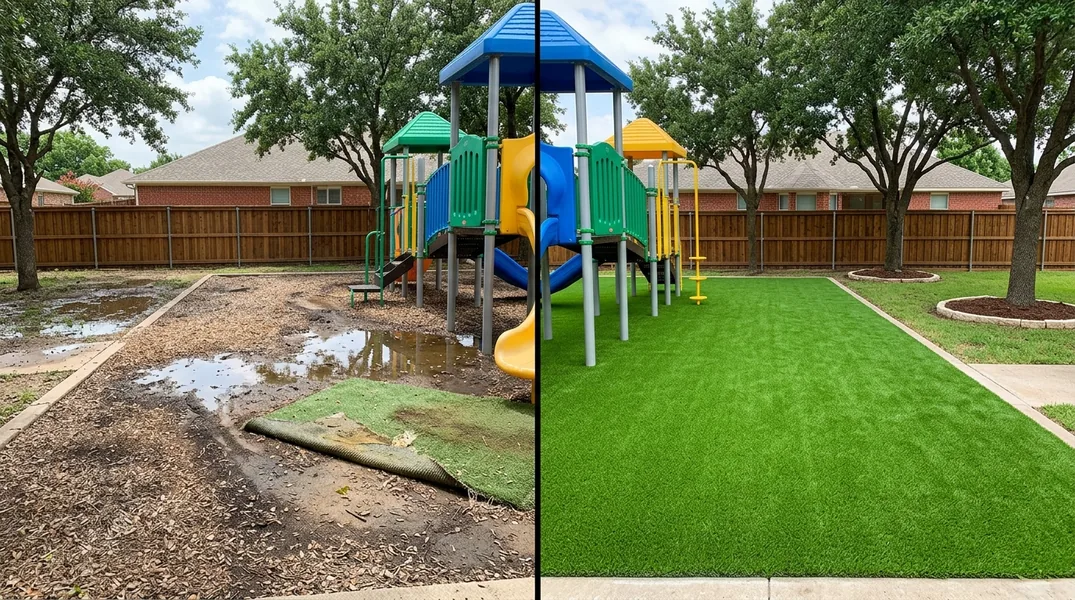
The Irving Landscaping Challenge: Why Homeowners Need Options
If you own a home in Irving, you've probably noticed the Texas heat and unpredictable rainfall make lawn care complicated. Summer temperatures regularly exceed 95 degrees, water restrictions come and go, and maintaining a lush green yard feels like a never-ending battle against nature. This is why more homeowners are asking themselves the tough question: what's really the best choice for my yard?
The answer isn't one-size-fits-all. Your decision depends on your lifestyle, budget, climate tolerance, and how much time you're willing to invest in maintenance. Whether you're considering Residential Artificial Grass Installation, sticking with traditional St. Augustine grass, or exploring Irving's native plant options, this guide will help you understand the real pros and cons of each approach.
Artificial Turf vs Real Grass: The Direct Comparison
When homeowners compare artificial grass vs real grass, they're usually weighing convenience against tradition. Real grass, particularly St. Augustine varieties popular in Texas, offers that authentic feel underfoot and the psychological comfort of a 'natural' lawn. However, real grass demands consistent watering, mowing every 7 to 10 days during growing season, fertilizing, weed control, and pest management. In Irving's climate, that translates to roughly 40 to 60 hours of annual maintenance and significant water consumption.
Artificial turf eliminates nearly all of that burden. Modern synthetic grass looks remarkably realistic, requires no mowing, no fertilizer, no pesticides, and minimal water (only occasional rinsing to remove dust and debris). The trade-off is the upfront investment and the fact that synthetic grass will eventually need replacement, typically after 15 to 20 years of heavy use. For families with young children, pets, or anyone who values their free time, Residential Artificial Grass Installation often wins the convenience battle decisively.
One honest consideration: real grass does provide environmental benefits that artificial turf cannot. Living grass absorbs carbon dioxide, produces oxygen, filters rainwater, and supports local insects and microorganisms. If ecological impact is your priority, this matters. However, if you're choosing between a dead, brown, water-stressed real lawn and artificial turf, the environmental argument shifts considerably in favor of synthetic options.
St. Augustine Grass: The Traditional Texas Choice
St. Augustine grass has been the default lawn choice for Texas homeowners for generations. It's a warm-season grass that thrives in heat and humidity, handles partial shade better than most alternatives, and establishes quickly. For homeowners committed to traditional lawn care and willing to manage the maintenance schedule, St. Augustine can produce a beautiful yard during spring and early summer.
However, St. Augustine comes with significant challenges in modern Irving conditions. The grass requires 1 to 1.5 inches of water per week during hot months, which conflicts with periodic water restrictions common in North Texas. It's susceptible to chinch bugs, brown patch disease, and dollar spot fungus. During drought years, even well-maintained St. Augustine lawns can thin out, turn brown, or die in patches. Overseeding, aeration, and professional disease management add hundreds of dollars annually to your lawn budget. Additionally, if you have pets or children who use the yard heavily, St. Augustine can develop bare spots that become mud during rain.
The real cost of St. Augustine isn't just financial. It's the stress of watching your lawn struggle during dry summers, the guilt about water usage during restrictions, and the time spent troubleshooting problems. Many homeowners discover that the 'traditional' choice becomes the most expensive and frustrating option over a five to ten year period.
Xeriscaping and Native Plants: The Sustainable Alternative
Irving homeowners increasingly explore drought tolerant landscaping and native plant options as a third path. Xeriscaping focuses on designing landscapes that require minimal supplemental water after establishment. Native Texas plants like Texas lantana, black-eyed Susans, prairie sage, and native grasses are adapted to local rainfall patterns and soil conditions. These plants support local pollinators, require less fertilizer, and naturally resist regional pests and diseases.
The appeal of xeriscaping is genuine. A well-designed native plant landscape can be stunning, ecologically beneficial, and genuinely lower-maintenance than St. Augustine grass over time. However, there are practical limitations worth acknowledging. Native plant gardens work beautifully for flower beds, borders, and accent areas, but they don't provide the same functional space as a lawn. If you want an open area for children to play, dogs to run, or a clean aesthetic backdrop for your home, a native plant garden alone typically won't deliver that.
Additionally, xeriscaping requires upfront knowledge or professional design. A poorly planned native plant landscape can look weedy or unkempt to neighbors unfamiliar with the aesthetic. Installation costs can rival or exceed artificial turf. And while native plants need less water, they still need thoughtful spacing, occasional pruning, and initial establishment care. For homeowners who want both ecological responsibility and functional lawn space, the best solution often combines elements: native plantings in beds plus artificial turf for the main yard area.
Cost and Maintenance: A Five-Year Reality Check
Let's talk real numbers. Over five years, here's what you're likely to spend on each option in Irving:
St. Augustine Grass: Installation runs $500 to $1,500 for sod. Annual maintenance (mowing, fertilizer, pest control, occasional overseeding) costs $600 to $1,200 per year. Water bills increase $50 to $150 monthly during growing season. Five-year total: roughly $5,000 to $9,000, plus the stress of management and weather-dependent results.
Artificial Turf: Professional installation ranges from $8 to $15 per square foot, so a 2,000 square foot yard runs $16,000 to $30,000. Annual maintenance is minimal: occasional rinsing and debris removal, roughly $100 to $300 yearly. Five-year total: $16,500 to $31,500 upfront, but zero water bills increase and dramatic time savings. After year seven or eight, artificial turf typically becomes the cheaper option when you factor in avoided maintenance and water costs.
Native Plant Xeriscaping: Design and installation vary widely from $2,000 to $8,000 depending on scope. Annual maintenance is moderate: $200 to $500 yearly for pruning and seasonal adjustments. Water savings are real but modest in year one. Five-year total: $3,000 to $10,000, with growing water savings in years three through five.
For pricing specific to your yard size and preferences, Irving Turf Installation offers a free estimate. Call (682) 214-9397 to discuss your options with a local expert who understands Irving's specific climate and soil conditions.
Which Option Is Right for Your Irving Home?
Choose St. Augustine grass if you're committed to traditional lawn care, have time for weekly maintenance, live in a part of Irving with reliable water access, and prioritize the feel of natural grass. This works best for homeowners who enjoy yard work or have the budget for professional lawn services.
Choose artificial turf if you want a low-maintenance, visually appealing yard that handles heavy use from pets and children, if you're tired of watering restrictions impacting your landscape, or if you value your free time. Residential Artificial Grass Installation is ideal for busy professionals, families with active lifestyles, and anyone building long-term value into their home. It's also the smart choice if you're planning to stay in your home for 8 years or longer, as the cost-per-year advantage becomes substantial.
Choose native plant xeriscaping if you're passionate about environmental stewardship, want to support local wildlife, and are willing to invest in thoughtful landscape design. This approach works beautifully as a complement to artificial turf, not as a complete lawn replacement.
The honest truth? Most Irving homeowners today are choosing artificial turf combined with native plant accents. It delivers the best of both worlds: a functional, attractive yard with minimal maintenance, plus ecological benefits in landscaped areas. If you're ready to explore this option for your home, contact Irving Turf Installation at (682) 214-9397 or request a free estimate today. We'll help you understand what makes sense for your specific situation.
Looking for a professional artificial grass installation company in Irving? Irving Turf Installation responds fast for all your artificial grass installation needs.
Get a Free Quote